
Lock forever chemicals in place.
We bind PFAS directly in contaminated soil, so rain can no longer carry them into groundwater, rivers and crops. With a mineral suspension applied using existing farm machinery. No excavation, no haulage.
PFAS in the soil threaten our water.
Per- and polyfluoroalkyl substances have been used since the 1950s in firefighting foam, coatings, textiles and paper. They dissolve readily in water and do not break down in nature. What makes them dangerous is that water carries them out of the soil.
- Through crops to people. Plants take up PFAS with soil water, and so they enter feed and food.
- Through groundwater into rivers and lakes. Seepage water carries PFAS into groundwater and on into surface waters, where they accumulate in fish and other wildlife.
- All the way into drinking water. Drinking water is the end of the line. Across Europe, around 23,000 sites have confirmed PFAS contamination.
What isn’t washed out can’t travel.
The risk does not come from PFAS lying in the soil. It comes from the water that carries them away. That is where we act: we bind PFAS so firmly to mineral particles that rain can no longer wash them out. The path to plants, animals and people is cut.
Rain dissolves PFAS from the topsoil. Seepage water carries them into groundwater, rivers, crops and drinking water.
PFAS stick firmly to the mineral particles in the topsoil. Seepage water passes through without taking them along.
Why bind rather than destroy?
Chemical destruction
Destroying PFAS currently requires excavation, very high temperatures or large amounts of energy. Incomplete destruction can leave short-chain breakdown products that are even more mobile. For hundreds of hectares of farmland this is neither technically nor economically feasible.
Immobilisation
Binding tackles the actual risk: transport by water. It works where the PFAS are, across large areas and with little effort. No new substances are formed, and the mineral itself does not degrade.
Bind it, don’t dig it.
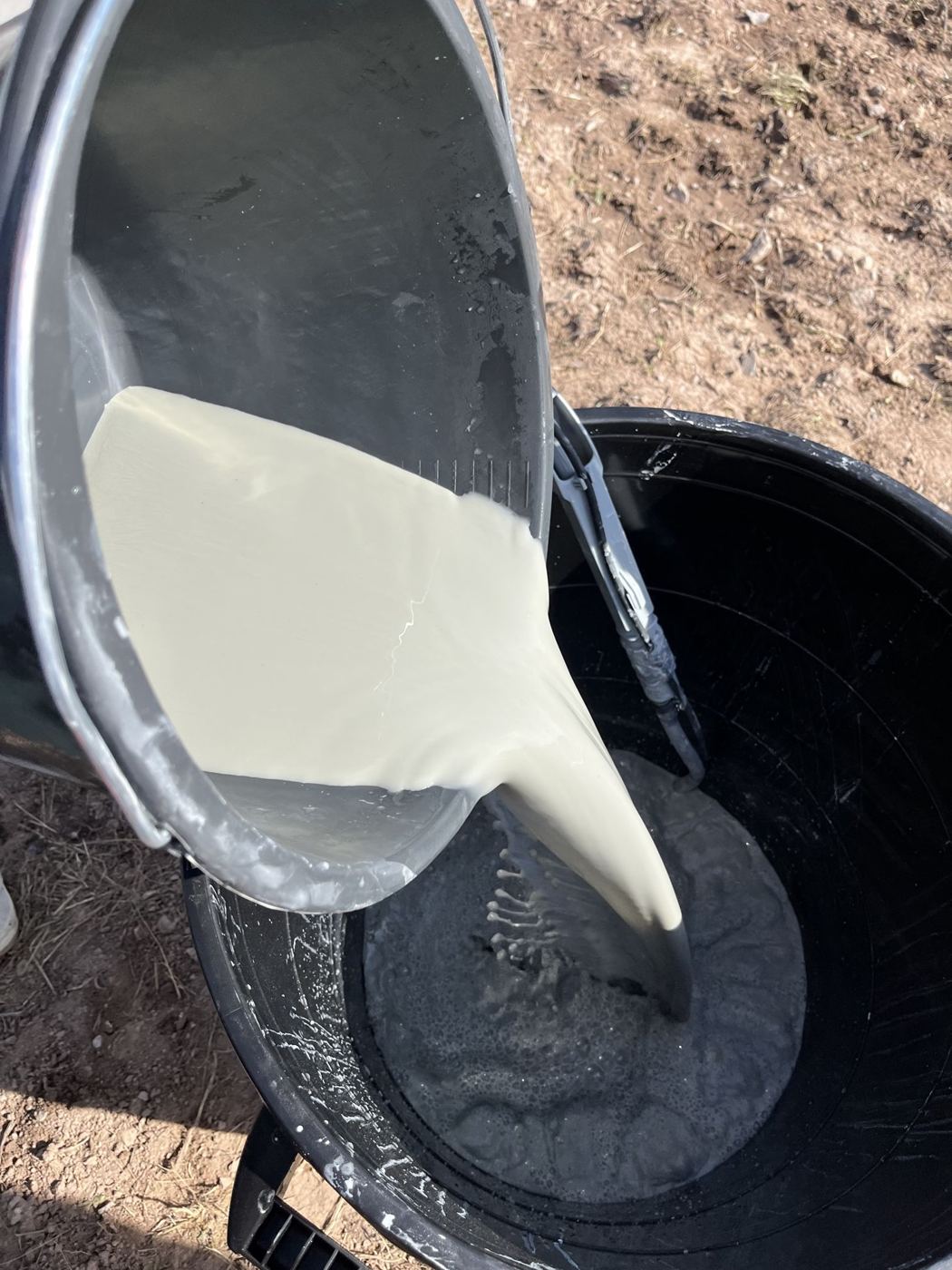
Our suspension, based on natural rock flour, is worked into the topsoil. The soil stays where it is, and stays usable.
Mix on site
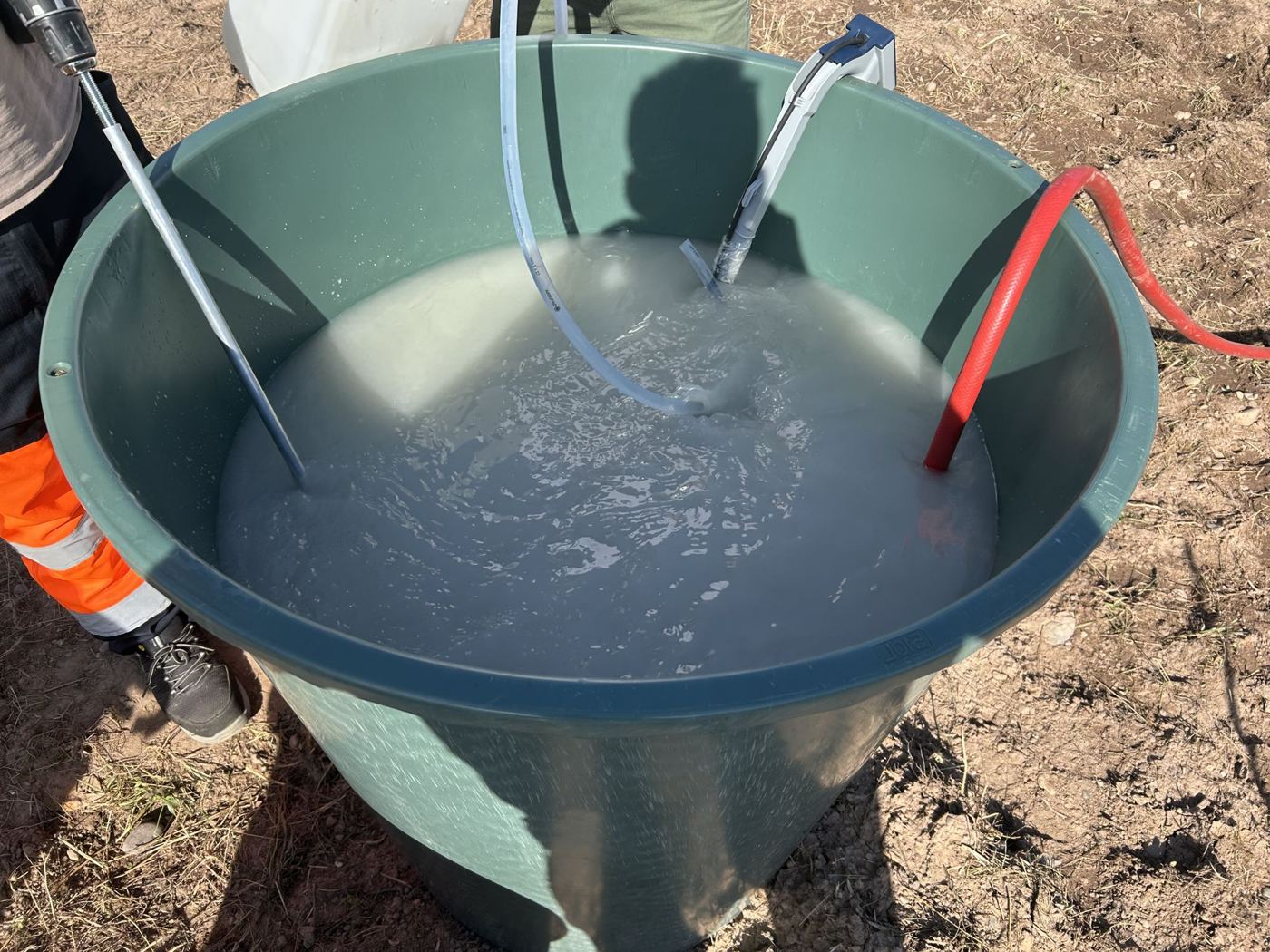
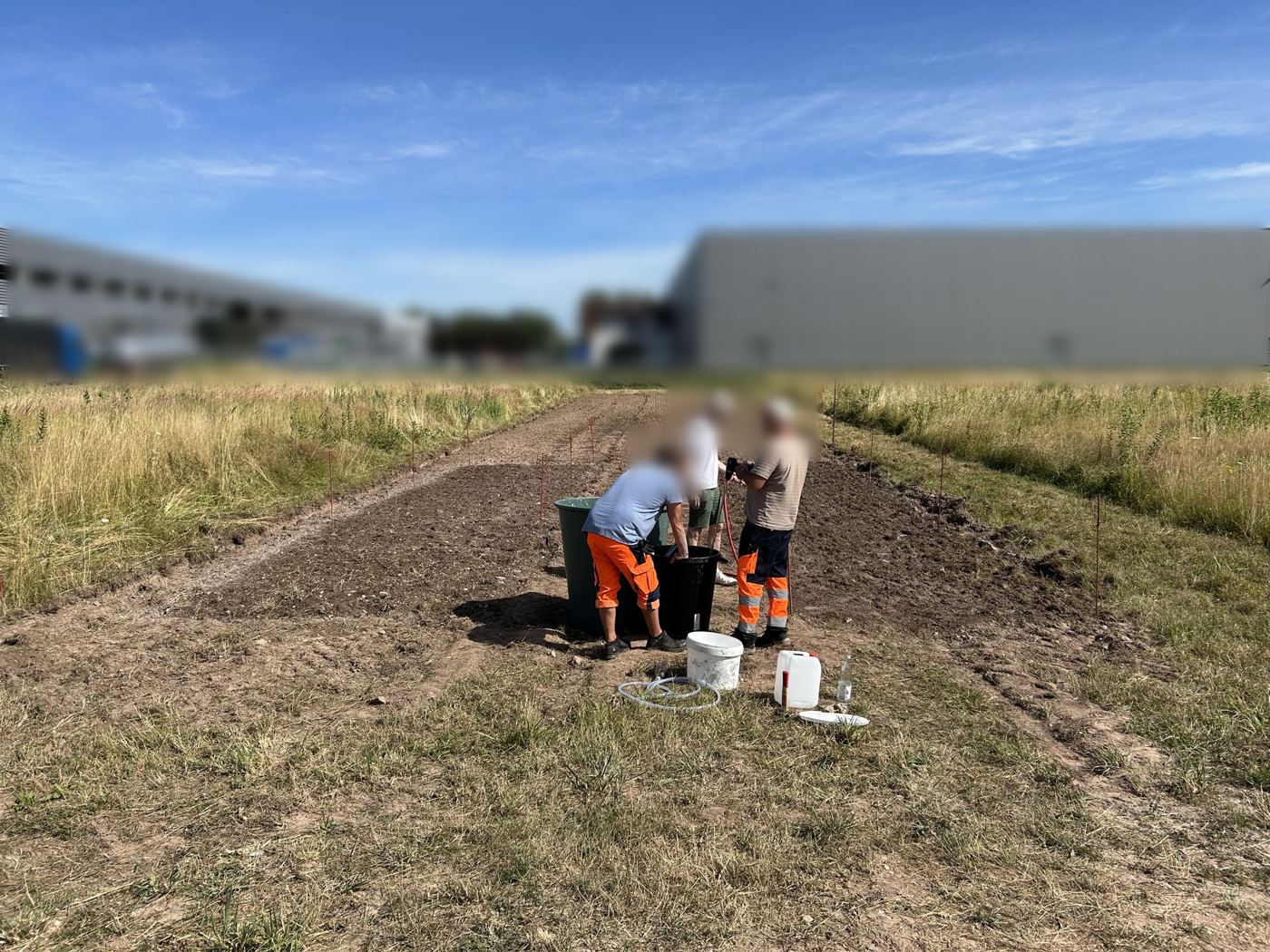
The concentrate is diluted with water directly in the tank of a field sprayer or slurry tanker. No mixing plant, no interim storage.
Apply and incorporate
Farmers and contractors apply the suspension with their existing equipment and work it into the topsoil. Soil moisture acts as the carrier that brings the suspension to the PFAS compounds.
Bind and verify
PFAS stay bound in the soil. Leaching tests to DIN 19529 document for authorities and clients that less PFAS is washed out.
| Method | Principle | Soil afterwards | Duration | Cost |
|---|---|---|---|---|
| Finity Solutions | In-situ binding with a mineral suspension | stays in place and in use | weeks | low |
| Soil replacement | Excavation, haulage, landfill | removed, site disturbed | months | very high |
| Soil washing | Extraction with washing solutions | heavily stressed | months | high |
| Thermal treatment | Heating to several hundred degrees | biologically sterile | months | very high |
| Phytoremediation | Uptake through plant roots | preserved | 3 to 10 years | low |
Tested on heavily contaminated farmland.
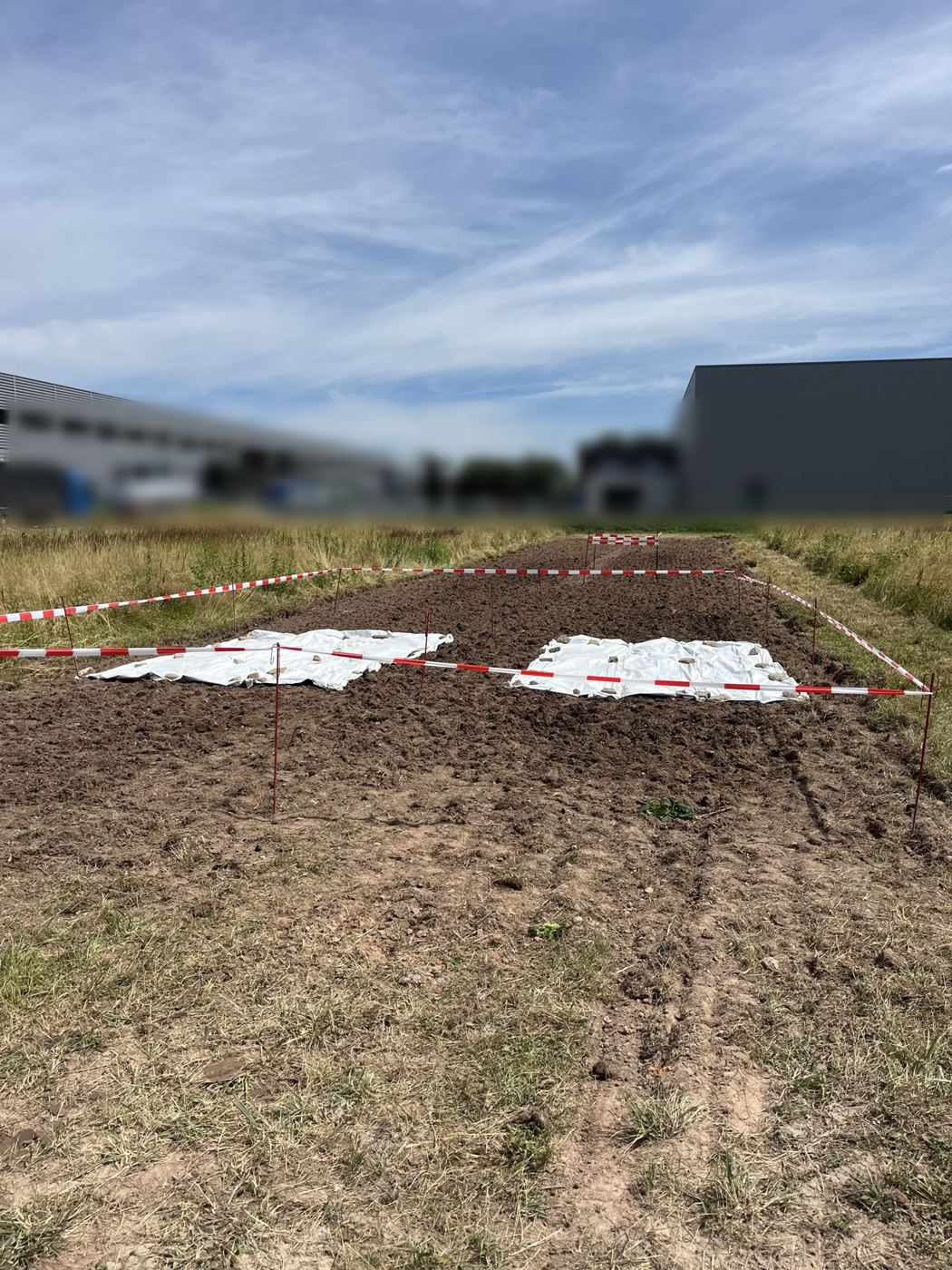
Since early 2026 we have tested the suspension on water, sediment, sewage sludge and arable soil, and in summer ran a field test on a heavily contaminated site in the Upper Rhine valley. All results are backed by test reports from independent, accredited laboratories.
- Much less leaching. PFAS concentrations in the soil eluate dropped several-fold on the treated plots.
- The effect lasts. The effect held throughout the observation period and even grew stronger over time.
- Binding despite interference. Arable soil contains a wide range of organic matter that can interfere with binding. The suspension binds the PFAS compounds nonetheless.
- No breakdown products. No new short-chain compounds are formed. The PFAS stay bound where they are.
Stronger sorption than on activated carbon
Activated carbon is the reference sorbent for PFAS in water treatment. To test binding strength, heavily contaminated activated carbon was treated with the suspension and then extracted with methanol (DIN 38414-14), a far stronger extractant than aqueous elution. Afterwards, all individual PFAS in the treated material were below the limit of quantification. The finding indicates sorption that exceeds binding to activated carbon. A recovery test to confirm the mass balance is planned.
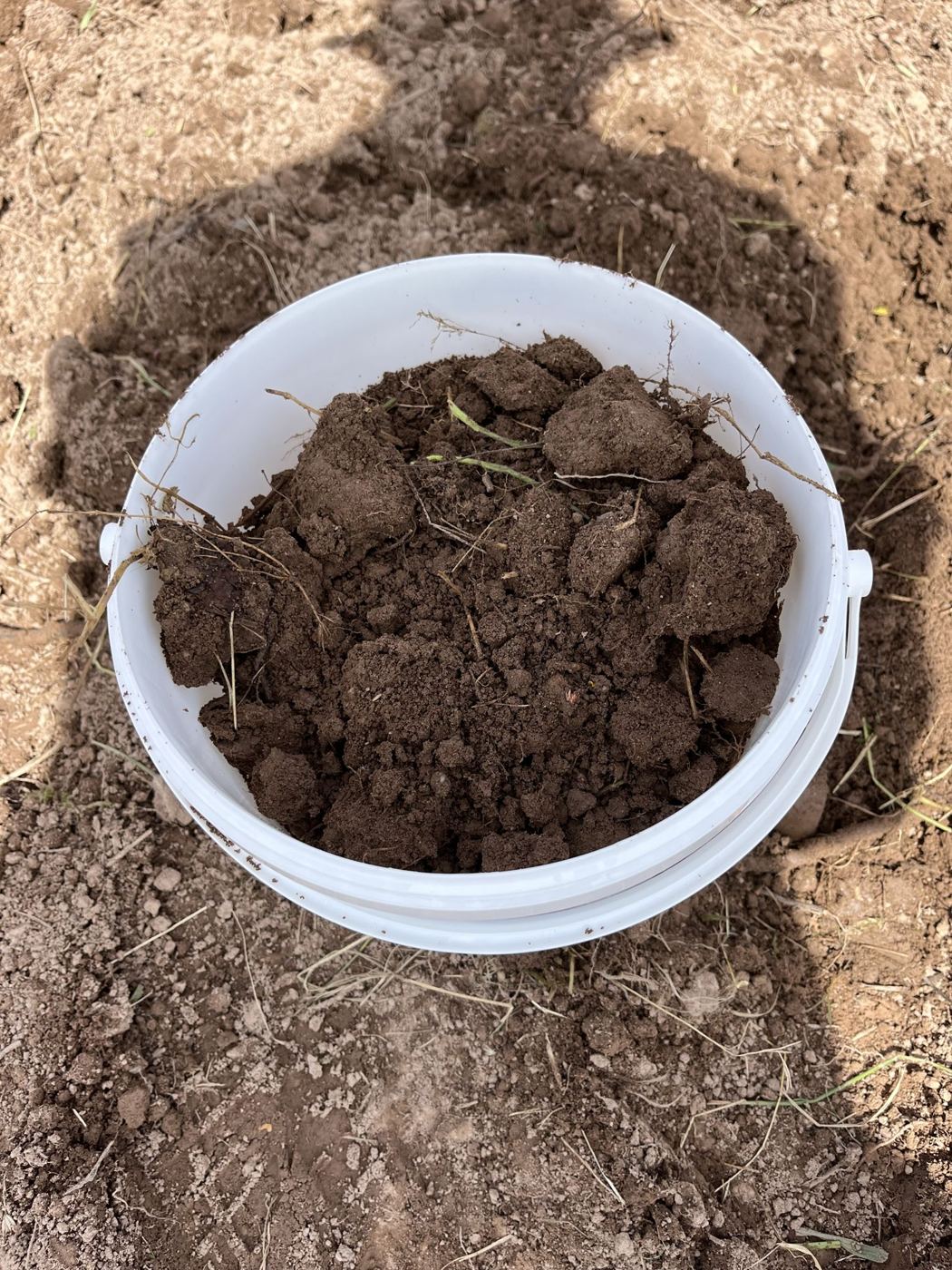
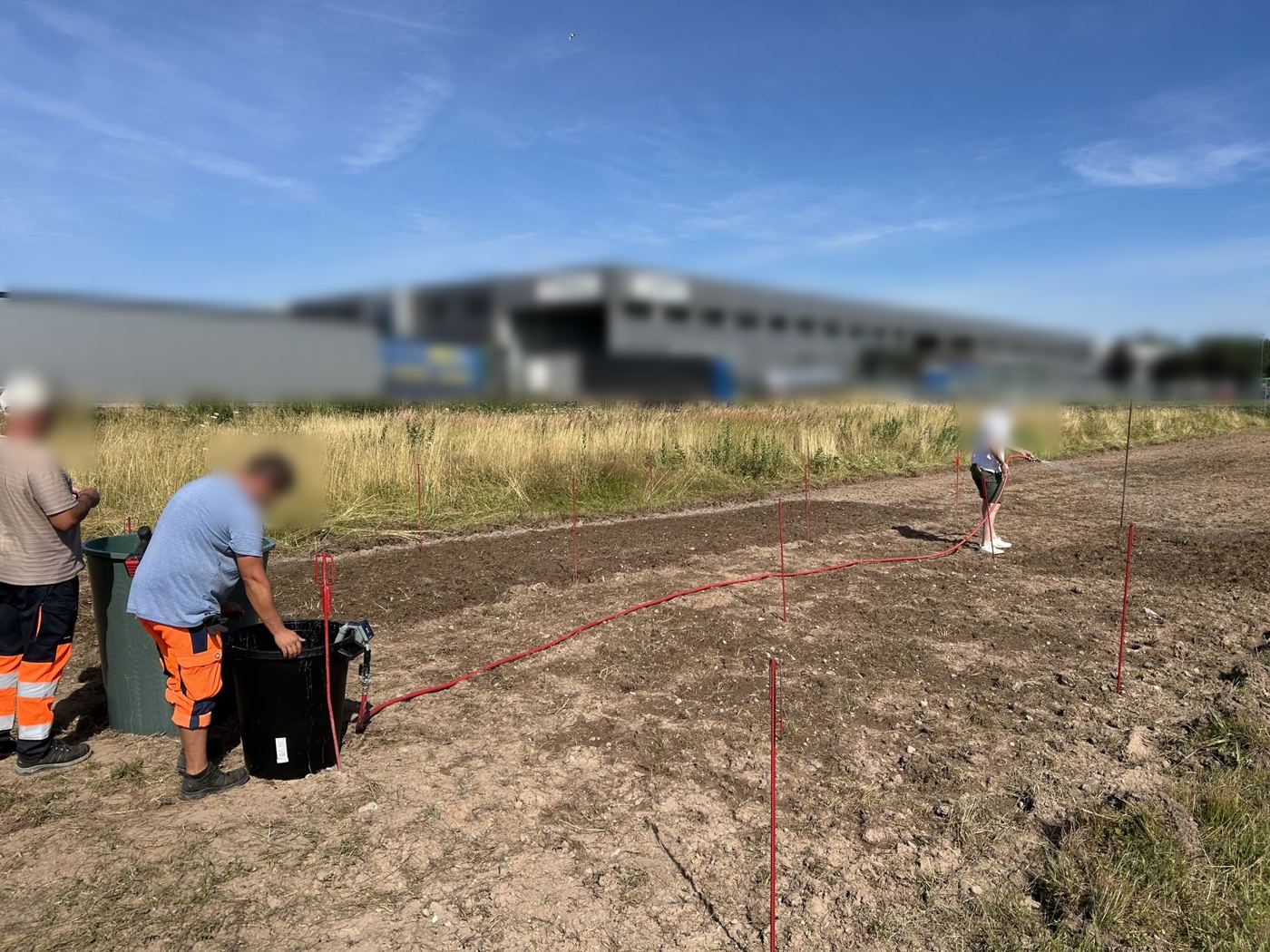
Detailed measurements are available to partners and authorities on request.
From field trial to market.
The first field trials showed reduced PFAS levels on all six trial plots. Before launch, we will test the method once more at scale, together with development partners.
- January to June 2026
Lab and container tests
Tests on water, sediment, sewage sludge, arable soil and activated carbon. Formula refined.
- July and August 2026
First field trials on contaminated farmlandcompleted
Application on six trial plots. All six showed reduced PFAS levels.
- November 2026
Accompanying assessment under the German Soil Protection Ordinanceresults expected
The ongoing tests under the BBodSchV are intended to establish the legal basis for use.
- Late 2026 / early 2027
Large-scale demonstrationpartners wanted
Together with development partners from municipalities, agriculture and industry.
- Then
Market launch
Roll-out through the network of machinery rings and agricultural contractors, in Germany and across Europe.
We are looking for development partners.
Do you have PFAS-contaminated land that you would rather not excavate? For our large-scale demonstration we are looking for partners who want to bring the method to market with us and be involved from the start.
Haferwende 36
28357 Bremen, Germany
+49 178 7878350
Finity Solutions brings together expertise from agriculture, surface treatment, wastewater management and contaminated-site remediation. The suspension is produced in Europe.